What Are the Top 10 Motor Parts Suppliers Worldwide?
Choosing reliable motor parts suppliers requires more than comparing product catalogs or advertised prices. Real performance depends on quality control, engineering support, delivery consistency, and traceable manufacturing.
This guide examines ten influential suppliers serving vehicle manufacturers, distributors, repair networks, and industrial buyers worldwide. It considers practical factors, including component durability, material standards, testing procedures, warranty policies, and regional availability. A dependable supplier should provide clear specifications for bearings, filters, belts, pumps, sensors, electrical components, and other motor parts.
Quality matters.
Industry experience also matters. Suppliers with established testing laboratories and long-term original equipment relationships often understand failure patterns better than newcomers. Their expertise can reduce installation problems and unexpected maintenance costs. However, company size does not guarantee excellent service. Smaller specialists may offer faster technical responses or stronger support for particular applications.
The comparison uses publicly available information, industry reputation, product coverage, and documented manufacturing capabilities. It also recognizes an important limitation: supplier performance can vary by country, factory, product line, and distributor. Delivery conditions may change quickly. Certifications should be verified before purchase.
Readers should treat this ranking as a practical starting point, not an absolute verdict. A supplier serving heavy trucks may not be ideal for passenger vehicles or electric motors. Pricing, local regulations, replacement availability, and after-sales support deserve equal attention. Careful buyers should request samples, inspect documentation, and confirm compatibility before placing large orders. Mistakes remain possible, especially when product data is incomplete. This guide aims to make that evaluation clearer, more realistic, and easier to act upon.
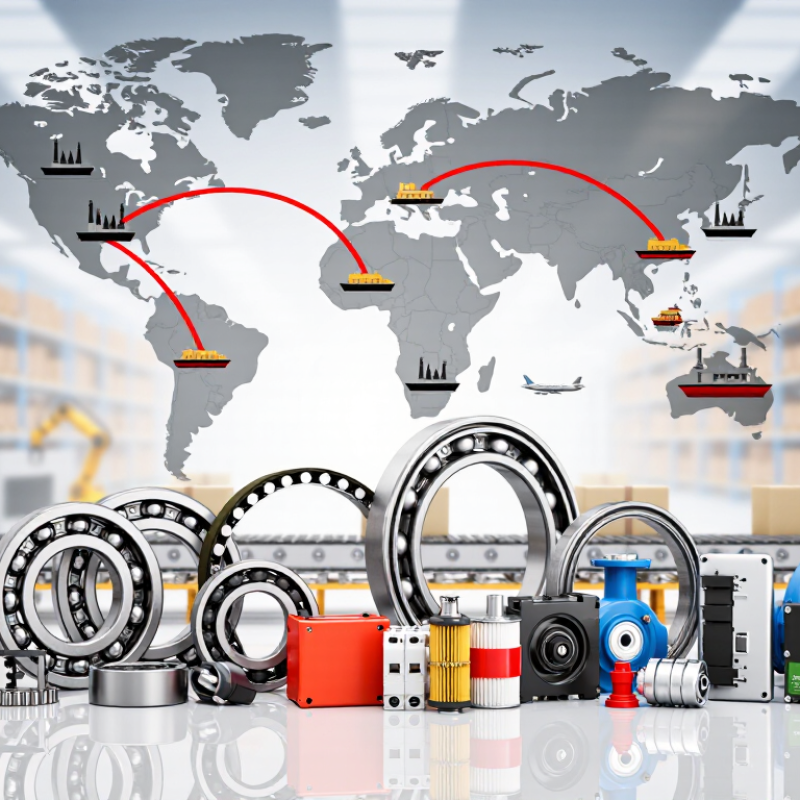
Understanding the Global Motor Parts Supply Industry
What Are the Top 10 Motor Parts Suppliers Worldwide?
The global motor parts supply industry includes manufacturers, specialist distributors, and certified component makers. The strongest suppliers usually provide bearings, rotors, stators, brushes, seals, connectors, sensors, gears, cooling fans, and housings. A top-ten ranking should measure more than production volume. It should examine quality control, delivery stability, engineering support, and traceability. In practical sourcing work, inspection records often reveal more than impressive catalogues.
Reliable suppliers maintain documented material controls and repeatable testing procedures. They can explain tolerance limits, heat resistance, insulation performance, and expected service life. Some also provide sample reports, batch codes, and technical drawings before production begins. Regional warehouses can reduce delays, but local stock does not always mean better quality. No ranking is perfect. Market data changes, and supplier performance can shift after one difficult shipment.
Tips: Request recent test reports, production samples, and replacement policies. Compare defect rates, not only prices. Check whether technical staff understand your motor’s operating temperature, load, vibration, and duty cycle. Ask how suppliers handle rejected parts. I have learned that communication speed matters when a shipment contains mismatched seals or noisy bearings. A cheaper component can create higher costs during assembly, testing, and field service. The best evaluation combines factory evidence, customer references, and small trial orders.
What Are the Top 10 Motor Parts Suppliers Worldwide? - Understanding the Global Motor Parts Supply Industry
| Rank | Anonymous Supplier Profile | Primary Region | Core Motor Parts | Main Customer Segments | Global Coverage | Common Quality Standards | Typical Supply Model |
|---|---|---|---|---|---|---|---|
| 1 | Global Tier-One Powertrain Supplier | Western Europe | Starters, alternators, ignition systems, sensors and engine-management parts | Original equipment manufacturers and independent aftermarket distributors | Manufacturing and distribution across Europe, Asia and the Americas | IATF 16949, ISO 9001, ISO 14001 | Original equipment supply, contract manufacturing and aftermarket programs |
| 2 | North American Electrical Systems Specialist | North America | Alternators, starters, voltage regulators, electric motors and replacement assemblies | Passenger vehicles, commercial fleets and remanufacturing networks | Strong North American presence with international export channels | ISO 9001, IATF 16949 and applicable vehicle safety requirements | Aftermarket distribution, fleet supply and remanufactured parts programs |
| 3 | East Asian Precision Motor Components Supplier | East Asia | Small electric motors, actuators, relays, sensors and electronic control components | Automotive electronics, industrial equipment and mobility manufacturers | Asia-Pacific production with worldwide OEM supply relationships | IATF 16949, ISO 9001, ISO 14001 and RoHS compliance | High-volume OEM production and engineering co-development |
| 4 | European Thermal and Engine Management Supplier | Central Europe | Cooling fans, pumps, thermostats, sensors and engine-control modules | Passenger cars, light commercial vehicles and heavy-duty applications | European distribution supported by regional warehouses worldwide | IATF 16949, ISO 9001, ISO 14001 and CE-related requirements where applicable | Original equipment programs and catalog-based aftermarket supply |
| 5 | Global Commercial Vehicle Parts Supplier | Northern Europe | Heavy-duty starters, alternators, pumps, braking-related motor components and drive systems | Trucks, buses, construction equipment and agricultural machinery | International fleet support with regional service and parts centers | IATF 16949, ISO 9001, ISO 14001 and commercial-vehicle regulations | Fleet contracts, distributor networks and repair-channel supply |
| 6 | South Asian Replacement Parts Manufacturer | South Asia | Starters, alternators, armatures, field coils, bearings and repair kits | Independent workshops, wholesalers and value-focused aftermarket buyers | Strong regional coverage with exports to Africa, the Middle East and Southeast Asia | ISO 9001, product traceability controls and applicable electrical standards | Private-label manufacturing and wholesale aftermarket distribution |
| 7 | South American Vehicle Electrical Supplier | South America | Alternators, starters, solenoids, regulators and electrical repair components | Regional passenger vehicles, buses, trucks and agricultural equipment | Primarily Latin American coverage with selected export markets | ISO 9001, local conformity requirements and vehicle electrical test procedures | Regional distributors, repair shops and fleet maintenance contracts |
| 8 | Electric and Hybrid Vehicle Component Supplier | East Asia and Europe | Traction motors, e-axle components, cooling pumps, battery auxiliaries and power electronics | Electric vehicles, hybrid vehicles and charging-system manufacturers | Expanding global supply footprint focused on electrified platforms | IATF 16949, ISO 26262 processes, ISO 9001 and applicable EMC standards | Engineering partnerships, platform supply and specialized aftermarket support |
| 9 | Specialty Bearings and Mechanical Motor Parts Supplier | Japan and Western Europe | Bearings, seals, pulleys, shafts, couplings and precision rotating components | Automotive, industrial motors, robotics and transport equipment | Global industrial distribution and direct OEM channels | ISO 9001, IATF 16949, ISO 14001 and dimensional inspection standards | Precision OEM supply, industrial distribution and maintenance replacement parts |
| 10 | Multi-Region Aftermarket Distribution Specialist | Middle East and Southeast Asia | Starter and alternator assemblies, sensors, belts, pulleys and electrical service parts | Independent aftermarket, wholesalers, service centers and fleet operators | Cross-border distribution across Asia, Africa and the Middle East | ISO 9001-based supplier controls, product testing and traceability procedures | Import distribution, regional warehousing and multi-brand-compatible product ranges |
Note: The table uses anonymous supplier profiles rather than company or brand names. Certification requirements, product coverage and geographic reach may vary by product line, plant and market.
Related Posts
-

How to Source Quality Motor Parts for Global Buyers?
-
Why Choose Original Auto Parts for Global Sourcing?
-

Top Strategies for Sourcing Quality Automotive Spares Efficiently
-
Unwavering Quality in the Best Motor Parts from Trusted Chinese Manufacturers
-
What Makes the Best Auto Transmission Essential for Modern Vehicles
-
How to Choose the Best Automotive Parts for Your Vehicle?